
You walk up to a bar pool table on a busy Friday night. Two people are halfway through a game, a coin sits on the rail, and nobody has said who is next. Do you wait, ask, or grab a cue? That small moment is why pool etiquette matters so much at a bar table.
Pool etiquette is the set of unwritten manners that keep a game fair, friendly and fun for everyone around the table. This guide is a checklist you can follow at any bar, from getting a turn and agreeing on house rules to what to do after a scratch and how to teach a friend without being annoying. The written rules get a short answer here, with links to the full guides.
Quick Answer
Good pool etiquette at a bar table comes down to six habits: wait your turn in line, agree on house rules before the break, stay still and quiet while your opponent shoots, keep drinks and chalk dust off the table, call your own fouls, and shake hands when the game ends, win or lose.
- Getting a turn: check the sign-up board, ask who is next and let the players see you waiting.
- Before the break: agree on how shots are called, what a foul gives and whether safeties are allowed.
- During the game: stay out of the shooter’s line of sight and keep conversation for between shots.
- Table care: drinks never go on the rails, chalk goes back face up and nobody sits on the table.
- Fouls and disputes: own your scratch, accept a fair call and use a neutral bystander for close hits.
- Manners: offer advice only when asked, praise good shots and finish with a handshake.
Here is the same checklist as a quick reference table.
| Moment | Do this | Skip this |
|---|---|---|
| Waiting for the table | Ask who is next or add your name to the list | Walking up and racking while others wait |
| Before the break | Say the house rules out loud | Changing the rules mid-game |
| Opponent is shooting | Step to the side, stay still, stay quiet | Talking, humming or moving in their view |
| Drinks and chalk | Use a nearby ledge, place chalk face up | Setting a drink on the rail |
| After a scratch | Say “scratch” and hand over the cue ball | Hoping nobody noticed |
| Helping a beginner | Ask first, give one tip at a time | Coaching every shot |
| End of the game | Shake hands and name a good shot | Gloating or blaming the table |
Want a place to put the checklist to work? Start with our guide to where to play pool near me.
What Is the Difference Between Pool Etiquette and Pool Rules?
Pool etiquette is the set of unwritten manners that decide how players treat each other and the table, while pool rules are the written rules that decide what counts as a legal shot. Rules settle who wins a point. Etiquette settles whether anyone wants to play you again.
At a bar there are really three layers, and it helps to know which one you are arguing about:
| Layer | Who sets it | Example | If you break it |
|---|---|---|---|
| Official rules | The World Pool-Billiard Association and league rulebooks | A foul gives your opponent ball in hand | The foul is called and the penalty applies |
| House rules | The bar or the players at the table | Whether safeties are allowed | The group decides, so ask first |
| Etiquette | Everyone, by habit | Staying still while your opponent shoots | No penalty, but people stop wanting to play with you |
Source: WPA standardized rules and league rulebooks. Bar and house rules differ from place to place.
What Are the Basic Pool Rules and Pool Game Rules?
Pool game rules change with the game you play. In 8 ball you pocket your group of solids or stripes and then the 8 ball, and in 9 ball you hit the lowest numbered ball first and win by legally pocketing the 9 ball. Our full guides explain each game: read the 8 ball rules or the 9 ball rules.
What Are the 8 Ball Scratch Rules?
A scratch means pocketing the cue ball or knocking it off the table. Under official rules it is a foul, and your opponent gets ball in hand, which means they can place the cue ball anywhere on the table. Many bars change this, for example by allowing placement only behind the head string, so ask before you play. The full 8 ball guide covers the special case of a scratch on the 8 ball itself.
How Do You Get a Turn at a Bar Pool Table?
Getting a turn at a bar pool table means finding out how the line works, then making sure the current players know you are waiting. Look for a sign-up board, ask who is next, or follow the local habit of setting a coin on the rail. Never start racking while others are waiting.
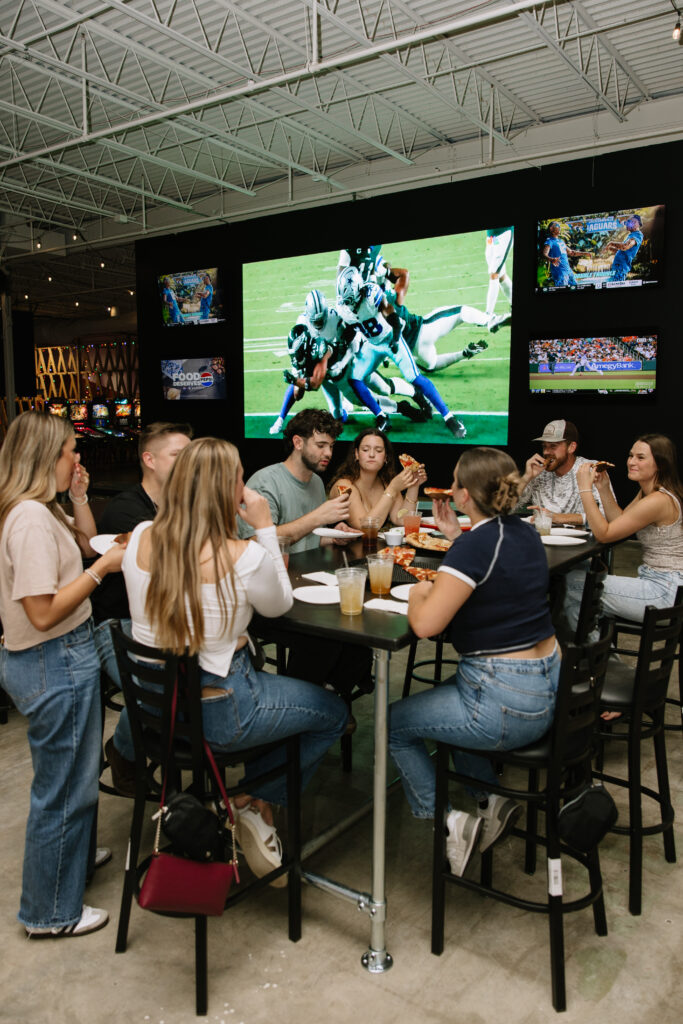
Every bar runs its line a little differently. These are the three systems you will see most often:
- Sign-up board: write your name under the last one on the board near the table, and cross it off when your turn comes.
- Coin on the rail: set a coin on the rail so the players see it, and make eye contact so they know it is yours.
- Just ask: a friendly “anyone next?” works in a casual room and avoids guessing.
Whichever system you find, be around and ready when the game ends. If you wander off to the bar or the arcade and miss your turn, the next person in line is allowed to go ahead.
What Does Winner Stays On Mean?
Winner stays on is the common bar custom where the player who wins a game keeps the table and the next person in line challenges them. The challenger usually puts in the coins, racks the balls and checks the rules before the break. The winner usually breaks the next game.
It is a simple system, and it works because everyone follows it. A new face who respects the line tends to get a friendly game, and sometimes a few tips as well.
How Long Can You Hold the Table?
You can hold a bar pool table as long as you keep winning and nobody is waiting, but once a line forms, good manners say to keep games moving and not to claim the table for hours. If a group has been waiting a while, offer them the next game. A quick “last game for us, then it’s yours” keeps the room happy.
Can You Play Doubles With Strangers?
Yes, many busy bars play doubles, but ask politely and agree on shooting order before the break. Never switch the format after people have waited, for example by suddenly requiring doubles or a different game. Players who waited for a simple one-on-one game deserve the game they signed up for.
What Should You Agree on Before the First Break?
Before the first break, agree on the house rules in about one minute: who breaks, whether shots are called, whether safeties are allowed and what a foul gives the other player. Bar pool rules differ from table to table, so a short chat prevents most arguments before they start.
Ask these five questions out loud, even if everyone nods:
- Who breaks, and do winners break the next game?
- Are shots called, or only the last ball?
- What does a foul give: ball in hand anywhere, ball in hand behind the head string, or nothing?
- Are safeties allowed?
- Do lucky pockets count?
Our 8 ball rules guide has a longer list of house rule questions, including what happens when the 8 ball drops on the break.
Who Gets to Set the Rules?
At many bars the player who holds the table sets the rules for the next game, and the challenger is expected to ask. Good manners mean saying the rules out loud and keeping them the same for the whole game. Rules that appear or change after a miss feel like cheating, even if nobody meant it.
Is It Rude to Play a Safety?
No, a safety is a legal shot played to leave your opponent a hard shot instead of trying to pocket a ball. The rude part is springing one on a bar crowd that did not agree to it. Some bars do not allow safeties, so ask before the break and call the safety out loud when you play one.
How Should You Behave While Your Opponent Is Shooting?
While your opponent is shooting, stay out of their line of sight, stay still and stay quiet. Step to the side or sit down, keep a few feet back, and save your comments for later. Do not talk to the shooter, move around in their view, or touch the table or the balls.
- Stand to the side: in their peripheral vision, so they can see you are paying attention without being distracted.
- Hands off: never touch the table, the balls or the cue ball while someone is shooting.
- Walk away after your turn: give your opponent room to reach the cue ball.
- Watch the next table: if you pass another game, pause or keep walking quietly past the shooter.
- Carry your cue upright: level it only when you line up a shot.
None of this needs to feel stiff. Bar pool is social, and a laugh between shots is part of the fun. The goal is simply that the shooter gets a few quiet seconds to enjoy the shot.
What Is Sharking in Pool?
Sharking is any move meant to distract or rattle an opponent so they miss, such as talking during their shot, humming, sudden movement or loud chalking in their view. It is considered poor sportsmanship almost everywhere. Easygoing banter between shots is normal at a bar, but the moment the shooter bends over the table, everyone goes quiet.
Is It Rude to Use Your Phone at the Pool Table?
Yes, if you use it while your opponent is shooting or while it is your turn. The glow and movement can distract the shooter, and a call holds up the players waiting behind you. Check your phone between games, or step away from the table first.
How Do You Handle Chalk, Cues, Drinks and the Table Politely?
Pool table care means keeping drinks, food and weight off the table and handling cues, chalk and balls gently. Set your drink on a nearby ledge, never on the rails, place chalk face up, and keep one foot on the floor when you shoot, which is also an official rule.
| Habit | Why it matters |
|---|---|
| Drinks on a ledge, never the rail | A spill can stain the cloth and change how the balls roll |
| Chalk face up after use | Chalk set face down leaves blue dust on the rail and the cloth |
| Chalk over the floor, not the table | Chalk dust that lands on the cloth gets into the game |
| Do not sit or lean on the table | Weight on the rails can damage the table, and one foot must stay on the floor |
| Set balls down gently | Slamming or tapping balls marks the cloth and rattles the room |
| Rack tight and straight | A loose rack ruins the break for the player who shoots it |
| Return cues, rack and bridge | The next group finds the table the way you found it |
Source: WPA standardized rules for the one-foot rule. The other habits are common billiard room custom.
Can You Put Your Drink on the Pool Table Rail?
No. Drinks, food and phones should stay off the rails and the playing surface, because one spill can ruin the cloth for everyone. Bars with pool tables usually have a ledge or small table close by, so use that and take your glass with you when you leave the area.
How Do You Use Chalk Politely?
Chalk your cue before your turn, hold it over the floor so dust does not fall on the cloth, and put the cube back face up. Do not hold on to the shared chalk after your turn, because your opponent may need it. Many regulars carry their own piece, which avoids the question.
What Should You Do When You Scratch or Foul?
When you scratch or foul, say so right away, hand the cue ball to your opponent if ball in hand applies, and step away from the table. Calling your own fouls is a core part of good pool etiquette, and it keeps small mistakes from turning into arguments.
The same goes the other way. If your opponent calls a foul that you did not see, accept the call with a smile. Nobody remembers a scratch for long, but everyone remembers an argument about one.
How Do You Settle a Pool Dispute Without Ruining the Night?
Settle a pool dispute by pausing, restating the rule you agreed on and, if it is still unclear, asking a neutral person. Most bar disputes come from rules that were never said out loud, so the fix is calm and quick. Follow these steps:
- Stop play and put the cues down.
- Restate the house rule you agreed on before the break.
- If the rule was never agreed, pick one together and use it for the rest of the night.
- For a close hit or a ball nobody saw, ask a neutral bystander to watch the next one.
- Agree on a fair fix, such as replaying the shot, and move on.
Raised voices rarely help in a bar. A calm “let’s just replay it” ends most arguments before the next round of drinks.
How Do You Teach a Beginner Without Being Annoying?
Teaching a beginner at the pool table works best when you offer help only after they ask, give one tip at a time, and explain the house rules before the game instead of after a foul. Kindness matters more than correctness on someone’s first night.
Everyone remembers the first time a ball dropped for them. A cheer from the table at that moment does more for a new player than a lecture on spin ever could. Try these habits:
- Ask first: “Want a tip on that one?” is a better opener than a correction.
- Keep it to one idea: a single point about where to stand or how to aim is enough for one game.
- Explain the odd rules: tell them which bar rules are different before the break, so a surprise foul does not sting.
- Team up: playing as partners instead of opponents makes a first game feel friendly.
- Play fair: skip tricks like blocking pockets on purpose, which make a casual game feel like a test.
Pool manners also apply to experts. A strong player who is gracious with a beginner is the person everyone wants at their table.
What Is the Etiquette for Group Nights and League Matches?
Group and league pool etiquette adds a few habits to the basics: only the players in the game stand near the table, teammates cheer but never root against the other side, and everyone is ready when their turn comes. Keep side chatter low so nearby games can play too.
What Are the Manners for League Night?
League night manners are the same as bar manners with more structure. Wish your opponent luck before the match, be ready to shoot when your turn comes, and keep your cue assembled until the match is over. Cheering for a teammate is part of the fun, and rooting against the other side is not. Treat the host venue’s rules and staff with respect.
How Do You Share a Table With a Big Group?
With a big group, set a simple order before the first break, keep coats and bags off the table and rails, and let spectators sit or stand back from the shooter. Rotate players so nobody waits too long, and keep the noise at a level the next table can live with. One friend who keeps the order makes the whole night smoother.
If your group is planning a full evening out, our game night ideas near St. Louis guide has more ways to keep everyone playing.
How Do You Win and Lose Gracefully at Pool?
Winning and losing gracefully at pool means shaking hands, thanking your opponent and keeping excuses to yourself. Praise a great shot out loud, skip the gloating, and never blame the table, the cue or the room for a miss. Players who handle both results well get invited back.
A few details matter near the end of a game:
- Do not concede by accident: saying “good game” or breaking down your cue while your opponent still has a shot can feel like giving up or like a mind game.
- Concede on purpose: if the game is truly over, say so clearly and respectfully.
- Laugh at the flukes: a lucky bank shot that wins the game is a story both players will tell later.
- Offer the rematch: if nobody is waiting, “one more?” turns a game into a good night.
What Can You Say When Someone Breaks the Unwritten Rules?
When someone breaks an unwritten pool rule, a short, friendly line works better than a lecture. Keep your tone light, say what you need, and assume the person did not know. Most people fix the habit right away when asked kindly, and the game goes on.
| Situation | A friendly line to use |
|---|---|
| Someone stands in your line of sight | “Mind stepping back a little for this one?” |
| Someone skips the line | “We’ve been waiting, are you next on the list?” |
| A friend coaches mid-shot | “I’ve got this one, tell me after.” |
| A drink is on the rail | “Let me move that so it doesn’t spill on the cloth.” |
| You are not sure of a rule | “Quick check: are we calling every shot?” |
| You scratch | “Scratch, it’s your ball.” |
| A game drags on while people wait | “Last game for us, then the table’s yours.” |
| A rules dispute starts | “Let’s ask a neutral eye and replay it.” |
Where Can You Play Pool Near St. Charles, MO?
Pool tables are found in bars, pool halls and entertainment venues across the region. Our guide to where to play pool in St. Charles, MO compares the options, and a quick call before you go confirms that a table is open.
Rec Hall is a 33,000 square foot venue at 800 S. Duchesne Dr. with an arcade, yard games, Zero Latency VR and a full bar. Call (314) 818-0916 to ask about pool table availability before you visit.
Waiting for a turn at any game is easier with something else to play. Between rounds you can chase a high score with how to play skee ball or browse yard games for adults, and the full bar and kitchen are close by for the break between games.
What Are Rec Hall’s Hours?
Rec Hall is open Thursday to Sunday and closed Monday to Wednesday. Here are the hours:
- Thursday: 5 PM to midnight.
- Friday: 5 PM to midnight.
- Saturday: noon to midnight.
- Sunday: noon to 7 PM.
Who Can Visit Rec Hall?
Guests of all ages are welcome until 5 PM on Saturdays and all day on Sundays. Thursday, Friday and Saturday after 5 PM the venue is for guests 18 and older. No reservation is needed for walk-in general admission unless a private event closes the venue to the public, so check the FAQs and the events calendar before you go.
Can You Book a Group for a Game Night?
Yes. Rec Hall hosts groups of all sizes, up to 800 guests, through private events at Rec Hall. For a smaller crew, call (314) 818-0916 to talk through your plans.
Ready to Play? Start Here at Rec Hall
Now that you know the unwritten rules, put them to use. Read our guide on where to play pool near me, check the events calendar, or send your group details through book your event. Questions first? Call (314) 818-0916 or use the Rec Hall contact page.
Frequently asked questions
What is pool etiquette?
Pool etiquette is the set of unwritten manners at a pool table: wait your turn, stay quiet while others shoot, respect the table and be a good sport.
What are the basic rules of pool etiquette?
Stay out of the shooter’s line of sight, keep quiet, keep drinks off the rails, call your own fouls, agree on house rules first and shake hands after.
How do you get a turn at a bar pool table?
Check the sign-up board, ask who is next or set a coin on the rail, and let the current players see you waiting.
What does winner stays on mean in bar pool?
The winner keeps the table and the next person in line challenges them. The challenger usually racks the balls and checks the rules before the break.
Is it rude to give advice during a pool game?
Usually yes. Offer a tip only when asked, and keep it to one idea, especially with beginners.
Can you put a drink on a pool table?
No. Keep drinks, food and phones off the rails and the cloth. Use a nearby ledge so a spill cannot ruin the table.
What is sharking in pool?
Sharking is trying to distract or rattle an opponent so they miss, for example by talking, humming or moving during their shot.
What should you do after you scratch in pool?
Say so right away and hand the cue ball to your opponent if ball in hand applies. Then step away from the table.
What are the 8 ball scratch rules?
Under official rules a scratch is a foul and your opponent gets ball in hand. Many bars limit placement to behind the head string, so ask first.
Do you have to call your shots in bar pool?
It depends on the house rules. Many bars only require calling the last ball, so agree on it before the break.
How do you settle a pool dispute?
Pause, restate the rule you agreed on, and ask a neutral bystander for close hits. If the rule was never set, pick one together and replay the shot.
Is it okay to use your phone at the pool table?
Not while your opponent is shooting or when it is your turn. Check it between games or step away first.
Does Rec Hall have pool tables?
Call (314) 818-0916 to ask about pool table availability before you visit. Rec Hall also has an arcade, yard games, Zero Latency VR and a full bar.
What are Rec Hall’s hours?
Thursday and Friday 5 PM to midnight, Saturday noon to midnight, and Sunday noon to 7 PM. Rec Hall is closed Monday to Wednesday.
About the Rec Hall Team
Rec Hall is a 33,000 square foot entertainment venue at 800 S. Duchesne Dr. in St. Charles, Missouri, with arcade games, yard games, Zero Latency VR and a full bar. Guests rate it 4.6 out of 5 from 820 Google reviews. Learn more about Rec Hall or read what is a rec hall.